TrialScope EXTRA 2026 banner

Representatives from more than a dozen companies attended TrialScope EXTRA 2026 in New York City. Following is a recap of the two-day clinical trial disclosure event.


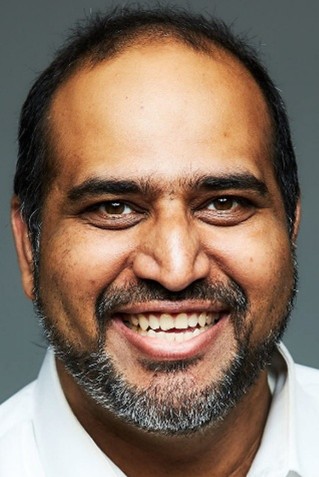
Headshot photo of Darshan Kulkarni

Darshan Kulkarni

Citeline’s annual event for our Regulatory customers is like a family reunion. It’s a time when attendees catch up with one another and are brought up to date on product enhancements as well as new Citeline solutions and services. This year was no exception, with one difference: The agenda featured two keynote speakers, one on each day of the two-day event.

Keynote Darshan Kulkarni, a regulatory and compliance attorney focused on clinical research, spoke on data ownership and data access. In terms of clinical transparency, he asked the audience: “Who owns the data?” Responses included the study sponsors, the patients, and vendors who compile the data.

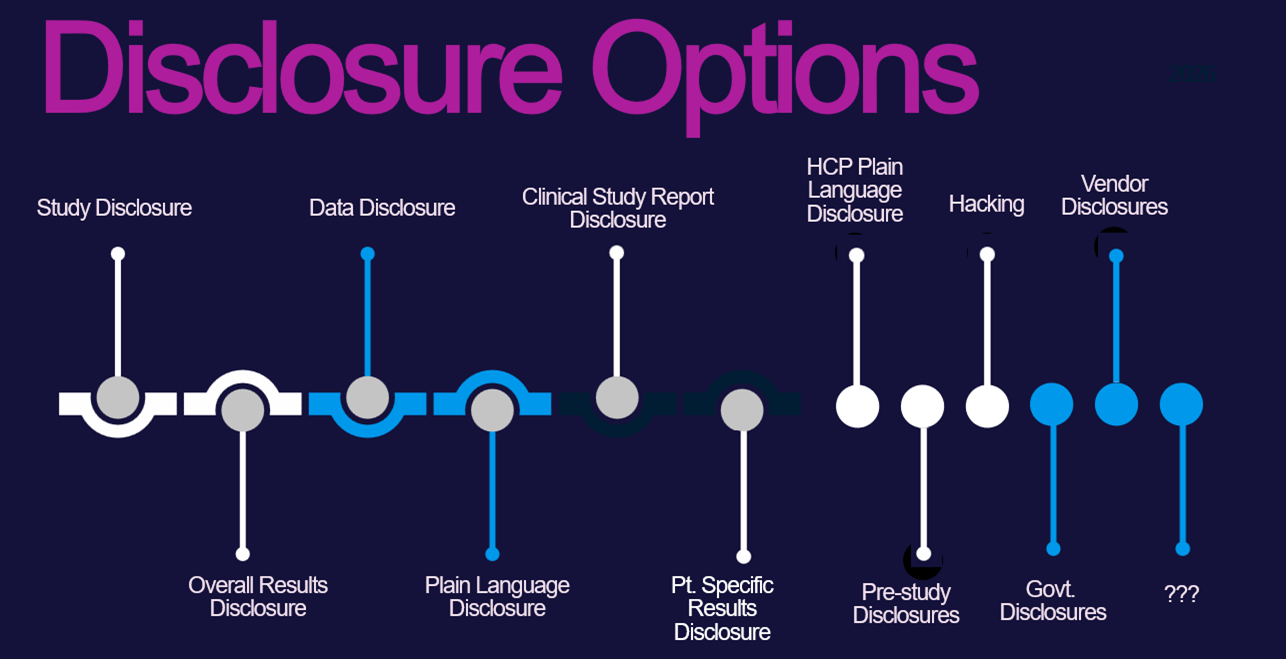
Kulkarni, who previously worked as a pharmacist, noted the various ways, both intentionally and inadvertently, that data are disclosed during the R&D process. He included raw data, referencing Real-Time Clinical Trials, an initiative being advanced by the US Food and Drug Administration (FDA) that allows agency scientists to view safety signals, clinical endpoints, and raw data streams live in the cloud as a trial progresses.

''

He discussed implications of the US BioSecure Act, passed at the end of 2025, which restricts the use of certain foreign biotech equipment and service providers. The act primarily targets Chinese firms.

Another US regulation that could impact the pharmaceutical industry, Kulkarni said, is the Department of Justice’s (DOJ) Bulk Data Rule, which limits foreign access to specific categories of "bulk" data — including health data, human genomic data, and biometric data. On the current list of restricted nations are China (including Hong Kong and Macau), Cuba, Iran, North Korea, Russia, and Venezuela.

Kulkarni used the following humorous analogy to describe the oversight of various US governmental bodies: “NIH [the National Institutes of Health] is your kindly, sort of slightly Alzheimer's uncle. Really nice, really, really sweet. You've got the FDA, which is mom, and she's going to keep you sort of in check. And then DOJ are the cops.”

He cautioned that states have varying data protection laws and outlined those in Washington, California, Texas, and Florida. To emphasize his point about varying state laws, he also outlined regulations on artificial intelligence, or AI, (“because no one talks about it,” he joked) in California, Colorado, New York, Texas, and Utah. Kulkarni also referenced the EU Artificial Intelligence Act, which classifies AI according to its risk.

He asked the group another pressing question: “Is your data copyrighted?” He reminded attendees that patents and copyrights are completely different laws.

If the data end up in the public domain, such as through use of an AI tool, Kulkarni asked: “What are the implications? It's not confidential anymore. You start losing patent rights, trade secret rights all within a year.

“Think of ownership as a packet of rights,” he said. “You've got right to sell, right to use, right to modify, right to protect, or duty to protect, if you will. In each of those scenarios, you have different rules that come to play.

“There's no such thing as a data patent. … Data has no intellectual property rights. … The actual raw data itself may not be protectable anyway. So you need to make sure that data itself has its own protections in it,” he warned.


The need for trustworthy, effective, and equitable health communication
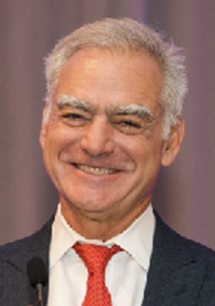
Headshot photo of Scott Ratzan

Scott Ratzan

Day two’s keynote speaker, Scott Ratzan, spoke on “Quality Health Information: How Quality and Clarity Now Directly Affect Regulatory Risk and Public Trust.” Ratzan wears several hats: He is editor-in-chief, Journal of Health Communication: International Perspectives; distinguished lecturer, CUNY Graduate School of Public Health & Health Policy; and co-chair, Quality Health Information for All: A Nature Commission.

“We have to think about how we use new technologies, build health literacy, multi-sectoral partnerships, and then finally how do we make accessible communication. Some of that has progressed and some of it is still needs some more work,” Ratzan said frankly. He did, however, list many caveats when people rely on AI technology for health information.

Ratzan defines “health literacy” as  “the degree to which individuals have the capacity to obtain, process, and understand basic health information and services needed to make appropriate health decisions.”

He shared key elements of a speech he gave on “Quality communication: The path to ideal health,” including:

  • Communication as a catalyst for health improvement
  • Trust and transparency as essential for public confidence
  • Partnerships among media, science, and institutions like the NIH and World Health Organization (WHO)
  • A call for evidence-based, empathetic, and accessible communication

When asked what impact the US pullout of WHO will have, Ratzan said his next stop was the World Health Assembly, where the US would not have a vote/representation, but Americans were still invited. “They are open to intermediaries,” he said.

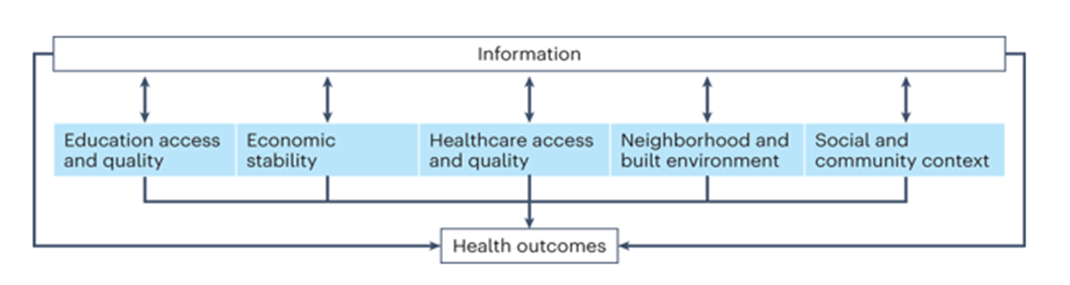
While much discussion in the industry centers on social determinants of health, Ratzan maintains that information is a determinant of health that underpins the social determinants of health.

''

Source: Graham, G., Goren, N., Sounderajah, V. et al. Information is a determinant of health. Nat Med (2024)


One way to improve health information, Ratzan said, is to start in the schools. In Finland, he said health literacy starts at a young age, with children under age 5. In the US, he said Virginia just mandated healthcare literacy training for 9th- and 10th-graders.

Ratzan shared his work with The Nature Medicine Commission on Quality Health Information for All. The commission’s goals are to:

  • Quantify the impact of gaps in access to quality health information on individual health and national economic growth
  • Promote broader access to accurate, reliable health information in the digital era
  • Improve public health by advancing health literacy and information equity for all people
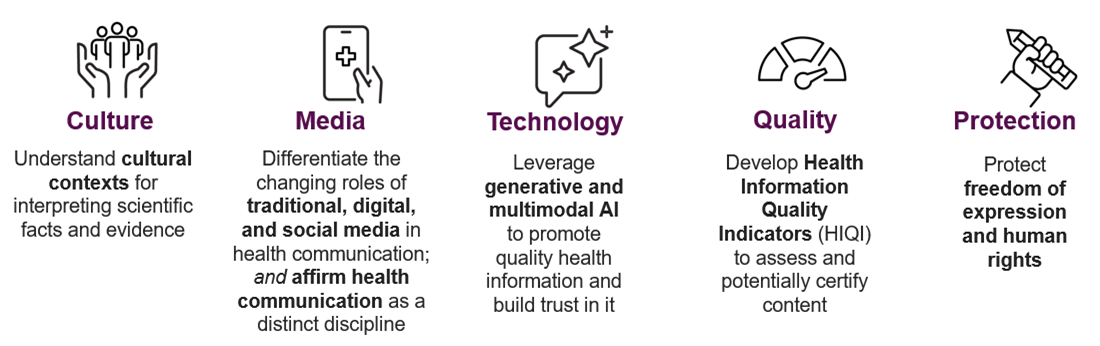
  • Affirm the importance of health communication as a distinct discipline to advance health

The commission report will form recommendations from five integrated, multi-disciplinary working groups:

''

Addressing the clinical trial disclosure professionals in the room, Ratzan said, “I think the plain language trial summaries … how we continue to translate that where the public understands the value and the values of science as part of the scientific process of bringing medicines to market are really key.”


BMS manages ClinicalTrials.gov compliance through agentic AI automation

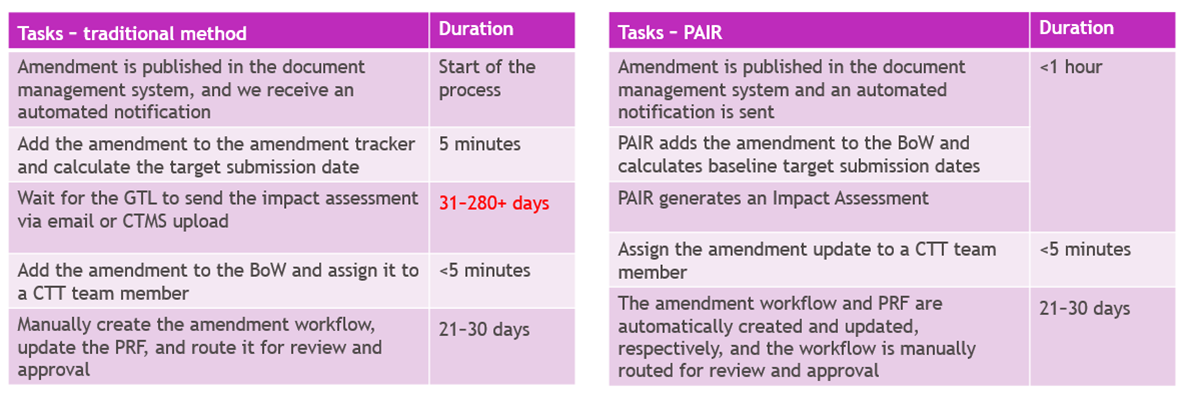
Evan Little, Clinical Trial Registration Manager II at Bristol Myers Squibb (BMS), shared how his company streamlines how amendment‑driven registration obligations are identified and managed using PAIR (Protocol Amendment Impact Review). He gave a demo on how the process works — illustrating its significant time savings.

The PAIR process uses AI to immediately generate the impact assessment, eliminating waiting periods for study teams to tackle this task. Its time savings are immense, reducing the completion time from up to 280 days to less than an hour.

''

Little said BMS is centralizing registration activities across local registries to streamline execution, reduce duplication, and mitigate transparency risk. He proudly noted that BMS is “holding steady at 100 percent compliance.”


Physician survey results

In her presentation — “The Trials of Trial Discovery: Is Your Registration Hurting Recruitment?” — Francine Lane, Head of Transparency at Citeline, shared preliminary results of a survey conducted October–December 2025 via Citeline’s Skipta physician platform. The survey was designed to find out how physicians search for and refer patients to clinical trials. Full survey results will be published this summer.

Last year’s TrialScope EXTRA keynote speaker, ER physician Bess Stillman, served as the impetus for the survey. Stillman struggled to find a clinical trial for her husband, who was diagnosed with tongue cancer, despite her medical background. The problem stemmed from how the wording differed in titles for relevant clinical trials.

Lane emphasized a key finding of the survey: After a median 11 minutes of searching for a trial for a patient, most physicians stop their search. She said this is why it is critical for clinical trial sponsors to carefully title their trials. She noted that while plain language is good for patients, it is not for physicians, who rely more on medical terminology.

Stillman also came across trials that were no longer recruiting patients. Lane suggests sponsors update their trial information more frequently than the 30 days required by ClinicalTrials.gov.

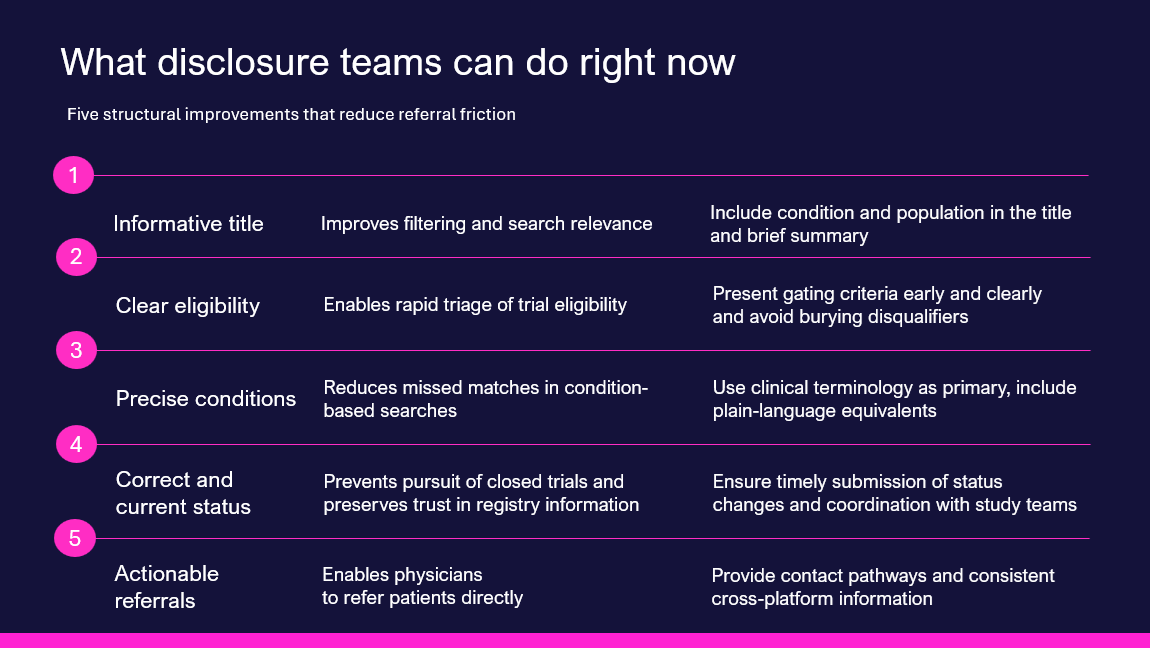
Lane offered some concrete steps sponsors can take to improve physicians’ search results:

''

“Disclosure teams influence successful searches,” Lane said. "Clear and accurate information enables discovery.”


More event highlights

Other session takeaways of TrialScope EXTRA 2026 included:

  • An overview of the new UK disclosure requirements that went into effect April 28
  • Unveiling Citeline’s new TrialMatch patient recruitment solution
  • Our partnership with Risklick, and how AI protocol creation plus TrialScope Disclose’s AI Importer create a streamlined workflow from clinical to regulatory
  • Major updates to Citeline’s flagship regulatory product, TrialScope Disclose
  • “Hot-off-the-press” enhancements to TrialSummaries.com
  • Upcoming redesign of TrialScope Intelligence
  • Our popular “speed dating” product demos
  • An overview of disclosure regulations in two global hotspots — Africa and Latin America
Disclosure teams influence successful [clinical trial] searches.
Francine Lane, Head of Transparency, Citeline
FAQ

Data ownership is complex and depends on context. Study sponsors are generally considered custodians of the data, but patients and vendors who compile the data also have claims. There is no such thing as a "data patent" — so organizations must put their own protections in place to safeguard it.

A Citeline physician survey found that after a median of just 11 minutes of searching, most physicians give up looking for a trial for a patient. Common barriers include unclear or inconsistent trial titles, the use of plain language that doesn't match the medical terminology physicians search with, and outdated recruitment status information.

Health literacy is considered a direct determinant of health outcomes. For clinical trial disclosure professionals, this means that plain language trial summaries are critical for helping the public understand the value of scientific research.

Related resources

Person using a laptop and stylus with FDA approval and medical research icons floating on screen.
APR 21, 2026
Blog
薬事規制関連支援サービス

FDAが臨床試験結果をめぐり2,200社超のスポンサーに連絡 ― 知っておくべきポイント

FDAは2,200社以上の治験実施責任者に対し、ClinicalTrials.govへの結果提出を促す通知を送付しました。最新情報、その重要性、および影響を受ける対象についてご確認ください。

A finger hovers over an illuminated checkbox among several checked boxes, symbolizing task completion.
FEB 16, 2026
Use Case
薬事規制関連支援サービス

No More Swiss Holes: Filling the Gaps in Clinical Trial Disclosure

In this use case, a sponsor is ready to conduct a Swiss-based clinical trial. TrialScope Intelligence clarifies the what, when, and how of registration.

A person typing on a laptop, with vibrant data streams visualizations emerging from the screen.
JAN 26, 2026
Use Case
商業化支援サービス

プロトコル設計から規制当局への申請まで、臨床試験ワークフローを効率化

シテラインが、研究のスケジュールを脅かす可能性のある2つの課題、すなわちプロトコル修正と臨床試験の規制当局への申請をどのように解決しているかをご覧ください。

Darkened Qualified calendar. Please allow all cookies to use functionality.

To enable the booking feature, please enable all cookies in your browser.