Talking Tailored, Scalable Recruitment Strategy at SCOPE Europe
Article
Patient Engagement & Recruitment

The saying “less is more” simply does not apply when it comes to patient recruitment. “There's a reliance, or over-reliance, on individual or singular data assets or extracts, information that comes from singular registries,” said Lindsay Stahl in a session on data-driven recruitment strategy at SCOPE Europe.
 Lindsay Stahl
Stahl, VP and Global Head of Patient Engagement and Recruitment, and Citeline colleague Skye Hodson, VP of Clinical Solutions, presented “Built-In Data Advantage: Integrating Data & Feasibility for a Tailored Patient Recruitment Strategy That Scales.” Hodson pointed out additional pitfalls associated with traditional feasibility, which often falls short due to fragmentation. “It's incomplete, partial data. We over-index on experience.”
“These segregated approaches that we're talking about really create gaps between protocol intent and patient reality,” Stahl said.
“We maybe only have limited views of site-level performance based on our own experience or the experience of our development partners … and we often miss that overlay in terms of patient calls and patients actually being seen at those sites,” Hodson cautioned.
 Skye Hodson
Compounding recruitment challenges, Hodson said, is the fact that only 4% of healthcare practitioners (HCPs) in the US actually participate in clinical trials. That means 96% of HCPs with access to patient pools are not being considered consistently. “What we're seeing at Citeline is a shift in evolution and feasibility today to be more powered by a holistic, impartial 360-degree, bottom-up use. We're really starting to see where the patients and best sites are, based on the quality of data,” because no one data source is sufficient, he added.
“The combination of Citeline and real-world data not only gets you the right patient, but it also can nd you the individual provider that's linked to them,” Stahl noted. “Sites can reach out to that provider, and they can make a referral into a trial site or guide their patients back to an available trial. All of this information relies on interoperability.”
“We can overlay proprietary data, we can connect through to cyber performance metrics, longitudinal, real-world data that's tokenized,” Hodson said, emphasizing compliance by protecting confidential patient information. “So we're really linked through to where these patients are.”
The result, Hodson said, is creation of forecasts, and enrollment forecasts are 33% more accurate. “It's infusing levels of precision so that we can get more accurate feasibility planning. So looking ahead … feasibility won't just be a planning exercise, it will be more about engineering and outcome.”
Citeline identifies potentially eligible patients for a trial based on the inclusion and exclusion criteria that are most important, as well as geographical proximity to sites. However, Stahl said interconnected datasets are key to recruitment success. “Identifying patients without the datasets connected would make it impossible to surface those patients and deliver to sites,” she said. “With the types of data we have, we can bring to bear claims both open and closed, EMR [electronic medical records], social determinants of health, information that stems from hospital and reference labs. We have information that comes from unstructured and structured clinical notes, and even data that exists through our Skipta network of healthcare providers, which is proprietary to Citeline; this is almost like a LinkedIn for HCPs.
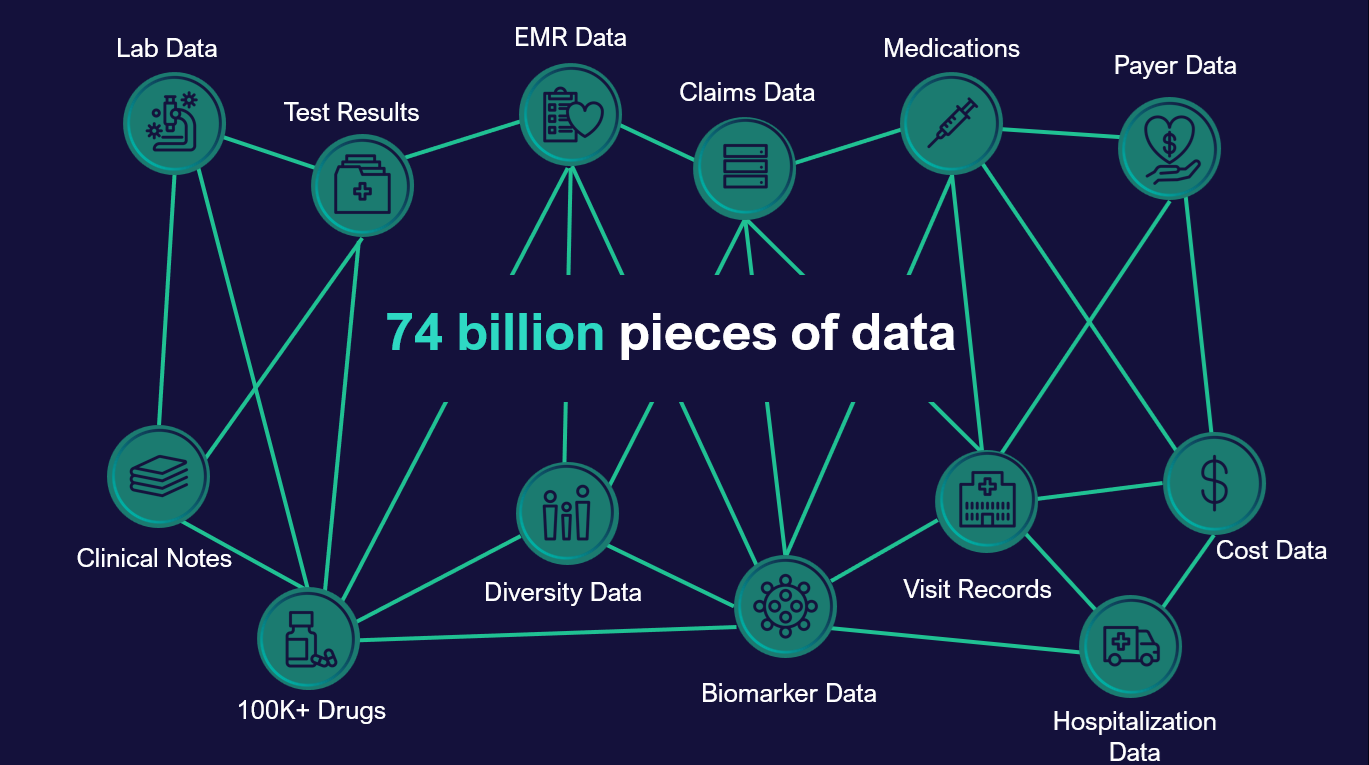
“We get access to the patient’s whole clinical history,” Stahl said, “and this is extremely important, because we can call upon full disease progression and diagnoses, cancer staging, attributes, tumor type and size, and other information about how a patient may be progressing through a disease, all kept in unstructured fields. This information can be extracted and matched to a clinical protocol. With this information, we can close gaps where information was previously lost.”
“What's really exciting about this,” Hodson said, “is reducing friction.”
“This approach gives us visibility into what I refer to as the trifecta of data,” said Stahl. “It's on the patient level, the provider level, and also the disease level. And it's clear to understand how patients are being treated with the combination of all of this data and all these factors together.”




Join our experts as they explore how real-world data (RWD) is reshaping patient recruitment strategies — moving beyond conventional site-first approaches to a patient-first model.

To enable the booking feature, please enable all cookies in your browser.

