4 Studies and Counting: My Experiences as a Clinical Trial Participant
Article
Patient Engagement & Recruitment

I’ve participated in four research studies to date, and if you count the fact that I donate blood on a regular basis, the number would be much higher. Here’s what I experienced:
As someone who writes about clinical trials on a regular basis, I decided it was time to put my money where my mouth is — or perhaps a thermometer where my mouth is, depending on the study. So as soon as I saw the email from my pharmacy announcing a clinical trial opportunity for healthy volunteers, I clicked (in more ways than one).
I’ve participated in four research studies to date, and if you count the fact that I donate blood on a regular basis, the number would be much higher. But before I share my experiences, I must provide a caveat. I’d like to warn others to be cautious when responding to unsolicited requests to join a clinical study. Case in point: The subject line of another email I received from “Findclinical” read: “Participate in a confidential clinical study.” That sounded reasonable. So I opened the email, which read:
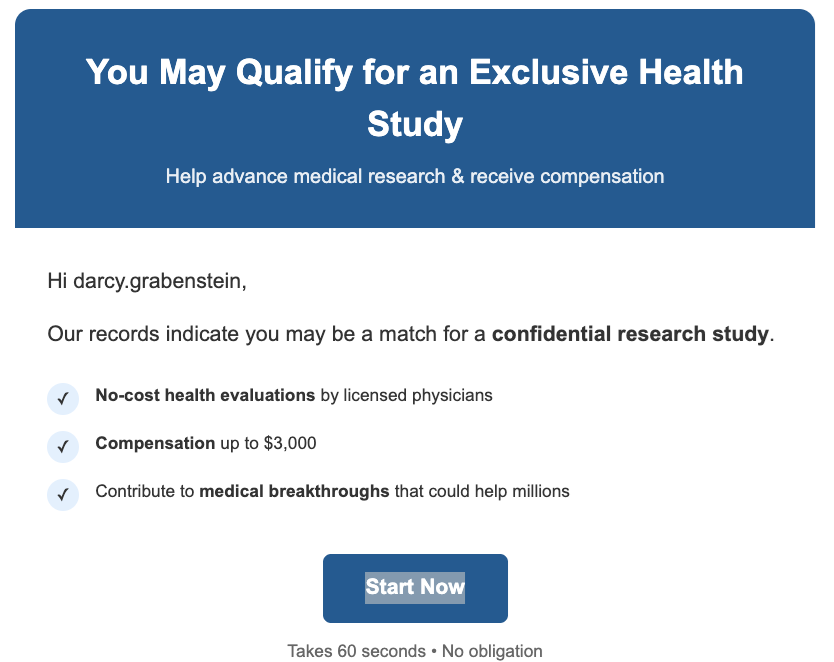
The offer of “up to $3,000” seemed a bit questionable to me. Upon closer inspection — luckily before I clicked on “Start Now” — I noticed that the sender of the email was, in fact, arkansashomeforsale.com. That, of course, was a red flag. Delete.
Back to the legitimate email from my pharmacy.
Biogen’s Intuition Brain Health study measured cognitive health in adults. According to a Biogen news release, the study’s goal was “to investigate the role Apple Watch and iPhone could play in monitoring cognitive performance and screening for decline in cognitive health including mild cognitive impairment (MCI).” This study ran from Sept. 20, 2021 to Sept. 19, 2023, so my efforts to remember details of the study will be a true test of my cognition.
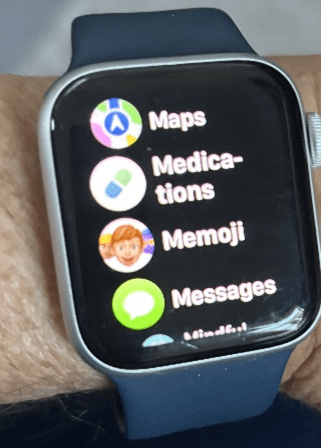
This was a remote study, conducted from the comfort of my own home. My incentive for participating in the study, beyond expanding my own knowledge and furthering the advancement of science, was a literal incentive: a free Apple Watch, which participants had to wear daily. In order to keep the watch, participants had to earn a certain number of points by completing daily and seasonal tasks. Accrued points could be redeemed for an additional $260 in gift cards or donations to charity.
Other requirements included the following:
Once I realized that I met all the inclusion/exclusion (I/E) criteria, I was eager to sign up. Before I knew it, I had received my watch in the mail, downloaded the Intuition app, and was good to go.
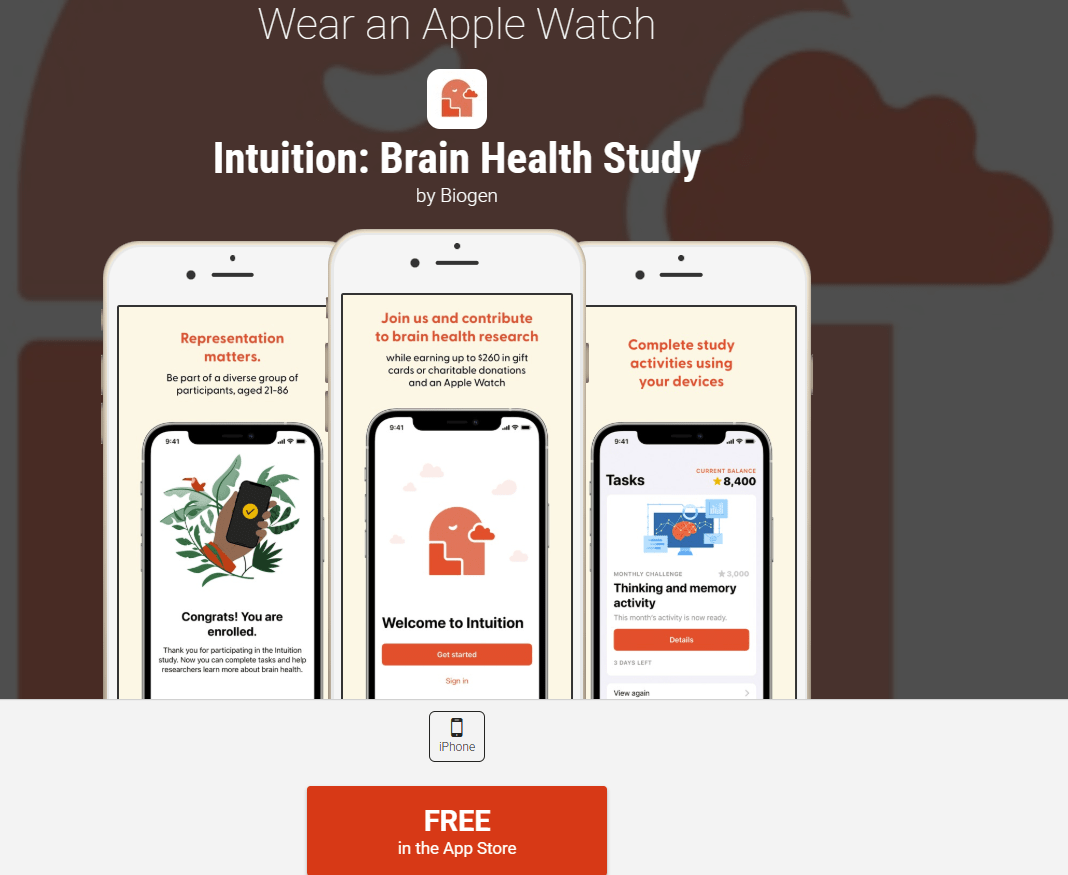
About once every three months, I did two short thinking and memory activities (about 3 minutes each) on my iPhone three times a day (morning, afternoon, and evening) over a two-week period. Despite the fact that I was sent reminders, I sometimes missed the window for an activity. Guess that in and of itself was a telling statement about my memory, or lack thereof.
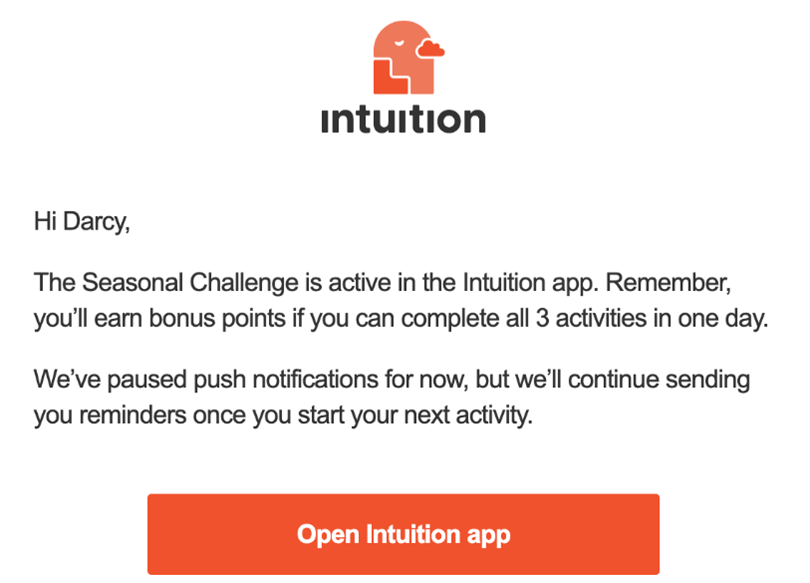
About once per month, I did an online thinking and memory activity that was supposed to take about 30 minutes. One of the activities was a matching test, similar to the old Concentration game (that reference alone explains why I qualified for this study). The catch: You could not proceed to next section before completing the task at hand. The screen said a section should take about 6 minutes; 12 minutes later, I was still struggling. I remember shaking my head as I predicted to my husband, “I’m going to be in trouble later in life.” Then I paused and rephrased my comment: “No, you’re going to be in trouble, because you’re the one who’ll have to take care of me!”
Another test rapidly showed a set of randomly repeating images, one at a time. My task was to tap on the image that appeared two images ago. Easier said than done.
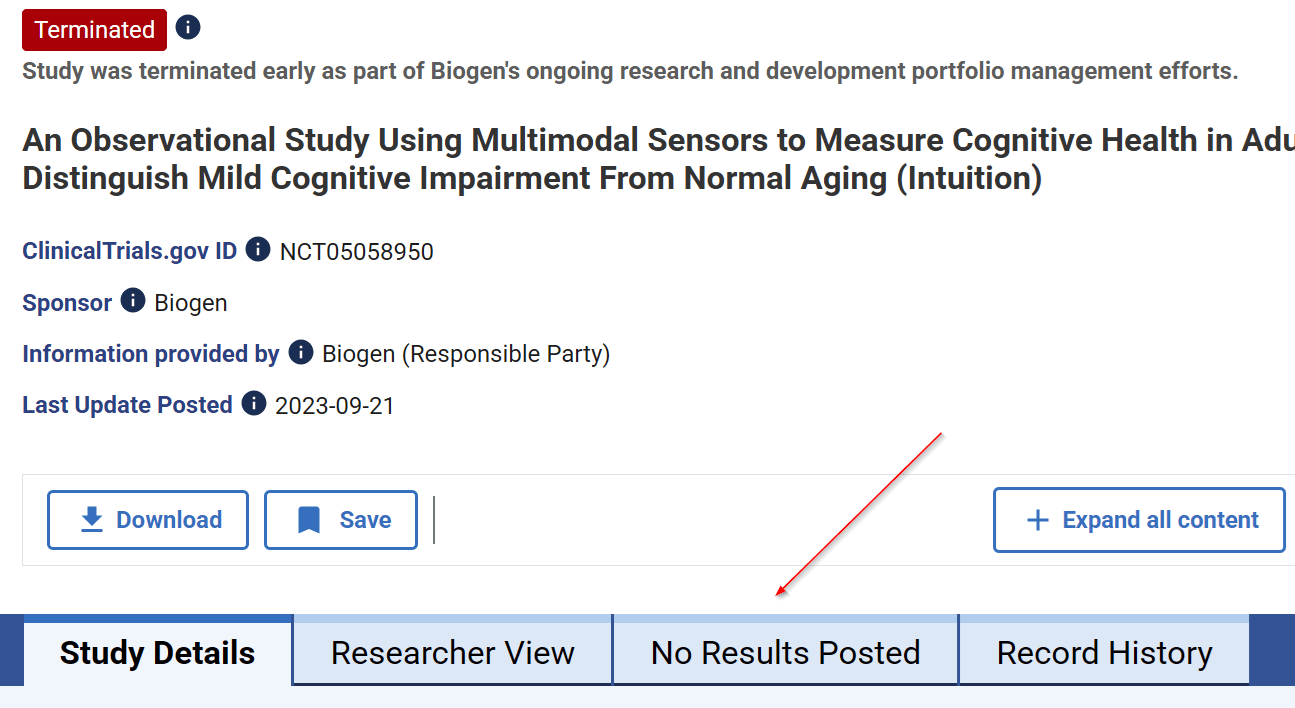
Because I am competitive by nature, I wanted to improve my responses (and response time) throughout the two-year study. The study ended early, as shown below, but I also ended my participation as soon as I had racked up enough points to keep my Apple Watch. After the study’s end, I was curious about the results. Unfortunately, this is what I found about the study on ClinicalTrials.gov:
At the DTx East event in September 2023, Abhishek Pratap, Head of Data Innovation, and Richard Hughes, Head of Cognitive & Mental Health Sciences at Biogen, gave an overview of the Intuition study and early learnings showing the feasibility of understanding real-world cognitive outcomes. In his update, Hughes showed that biomarkers were able to identify people developing cognitive symptoms and promised additional insights from the data would be forthcoming.
In September 2024, MobiHealthNews reported that Biogen confirmed it was shutting down Biogen Digital Health, a global unit of the biotech company, pulling out of the study with Apple. Dan Haro, Senior Manager of Global Corporate Communications and Media Relations at Biogen, was unaware of the study’s status. He says it appears that the manuscript of the results/findings was never published, and the responsibility sits with Apple.
A pharmaphorum article in March 2025 reported that study results showed the feasibility of using passive sensors on devices such as the iPhone and Apple Watch, alongside other metrics, to chart changes in thinking and memory over time that could point to MCI.
My next remote clinical trial opportunity also came via email, in April 2024: the Smell Test Challenge. And, if you guessed it was a scratch-and-sniff format, you’re correct. My sinuses are perpetually congested, so I seriously doubted my ability to pass the test with flying colors.
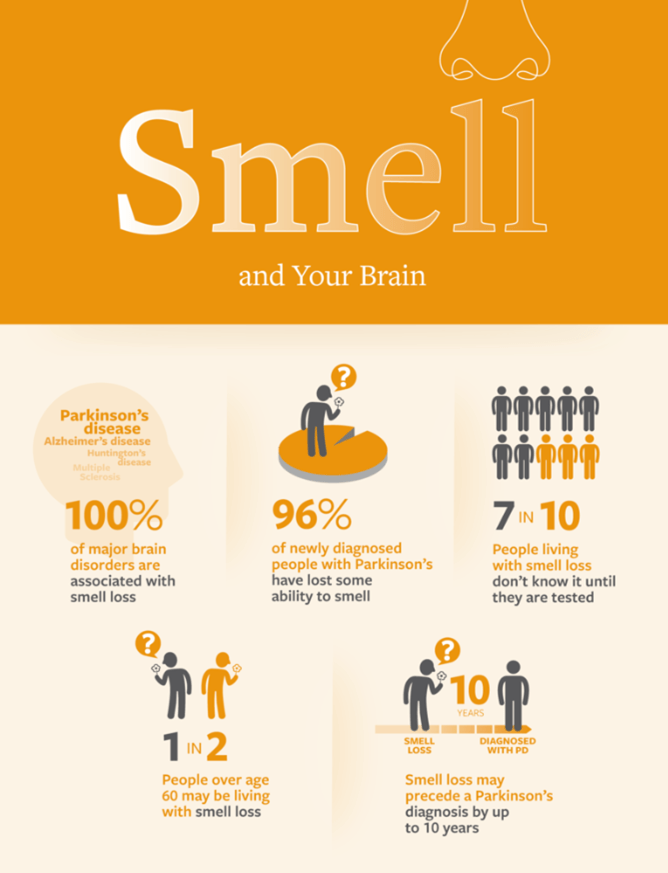
This study, the Parkinson's Progression Markers Initiative (PPMI), is conducted by The Michael J. Fox Foundation. Anyone age 40 and older (although some materials again indicated otherwise) without Parkinson’s disease is eligible to participate in the test, which is designed to help scientists learn more about risk and develop new treatments. Loss of smell is thought to be one of the most important signals of Parkinson’s risk.
When I received the study materials in the mail after signing up online, I ripped open the mailer like a kid on Christmas Day. Inside was a booklet with scratch-and-sniff strips featuring common scents such as cinnamon, lemon, gasoline, soap, onion, licorice, and banana.
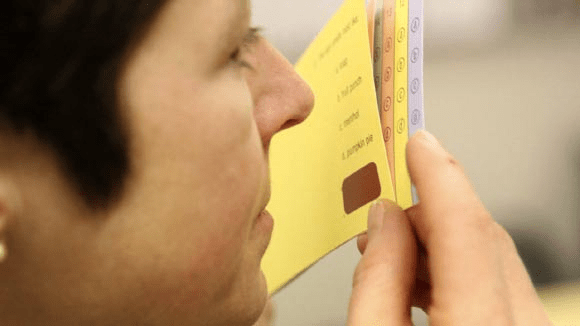
Image credit: Northwestern University
My task was to gently scratch each strip to release the scent and then choose the correct answer from a list of four multiple-choice options on the page. Based on my undivided focus, you’d think I was taking an SAT college entrance exam. I inhaled deeply, trying to capture as much of each scent as possible before making my selection.
This time, I did receive my individual results. Good news: My sense of smell was intact. Of course, there are no guarantees I’ll be spared a Parkinson’s diagnosis in the future. Now, where did I put my reading glasses?
An email from Stockton University in New Jersey alerted me to another clinical trial opportunity, this time in the lab. The email’s banner caught my attention:
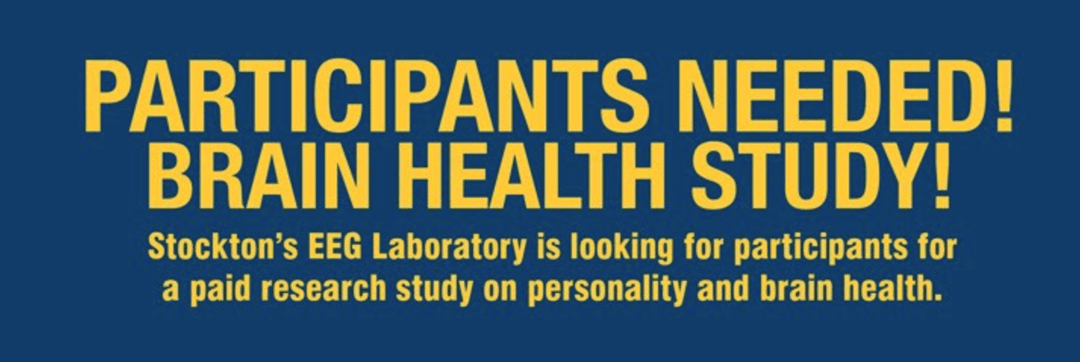
My interest piqued, I inquired about the study and found out that the lab session would include an EEG recording, measure of personality, and two brief tests of thinking and memory. The pay was $40, barely enough to cover my travel time, time in the lab, and gasoline to and from the campus. But I was game.
On Nov. 24, 2024, I entered the school’s Healthy Brain Healthy Mind Research Lab and soon found my head hooked up to dozens of electrodes.
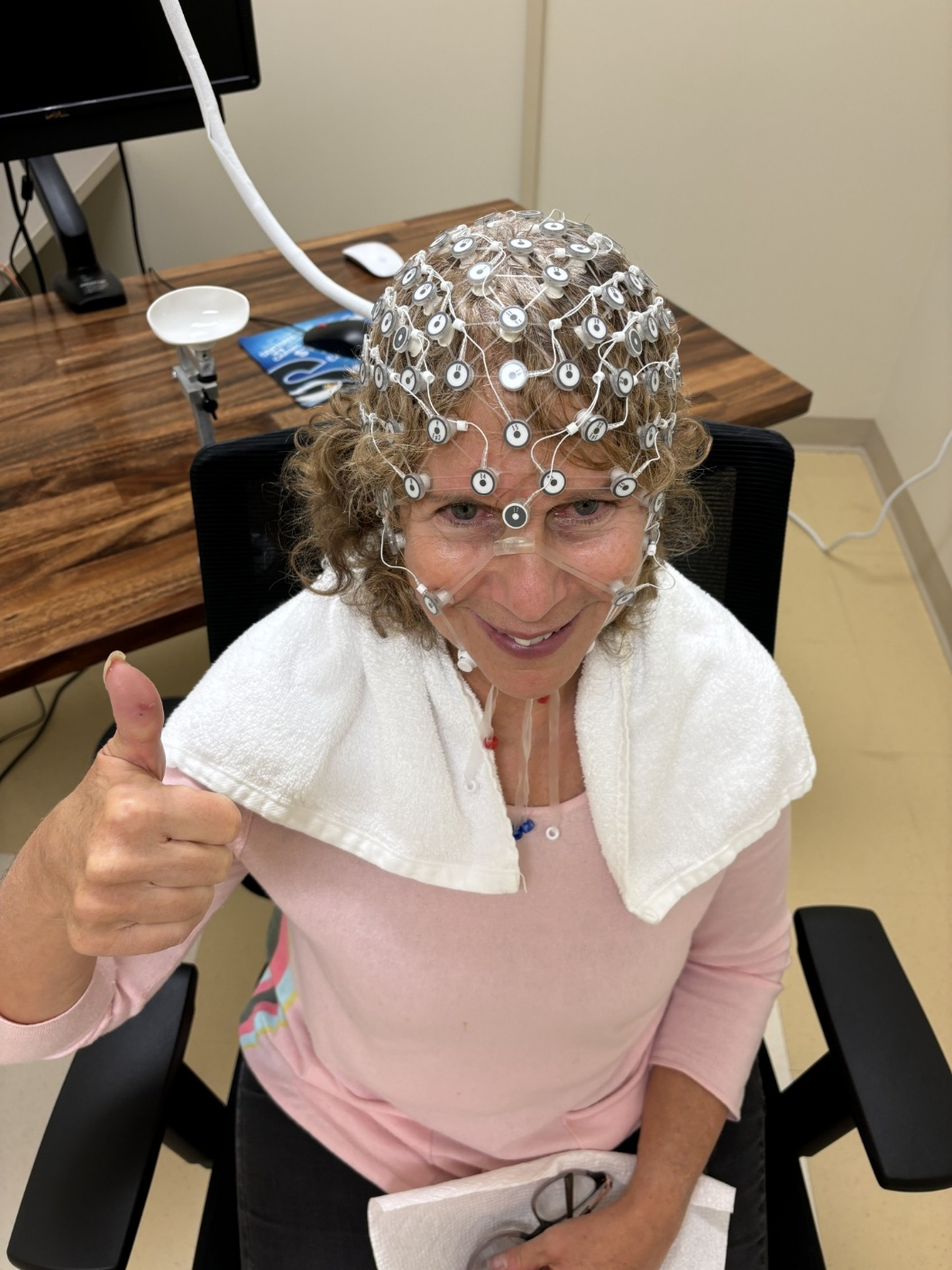
The author, a cross between a lab rat and Frankenstein
Unlike the smell test, this study notes: “All results will be reported for the overall dataset and no individual data will be reported.” As this study appears to be ongoing, I have not seen results yet.
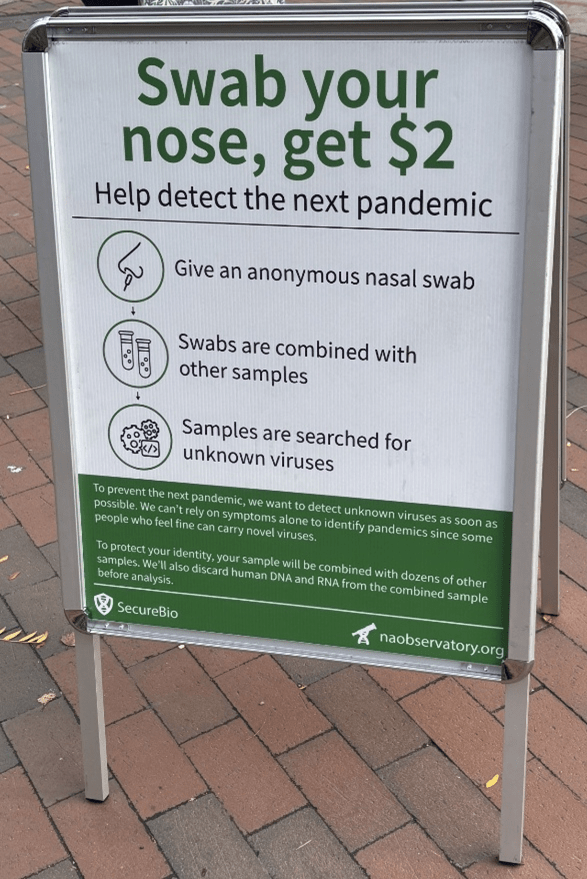
In November 2025 I was in Boston for a conference and walked right past this sign:
I did a double-take and then decided to take the bait, er, the test. This study is being conducted by SecureBio, an independent nonprofit, and its Nucleic Acid Observatory, which monitors the spread of diseases. In 2024, the observatory launched Zephyr, a program that uses nasal swabs to monitor viruses people carry. The idea is to track viruses in the local population. Because I was a visitor, I wonder if my participation will skew their results.
Speaking of results, below are results as of December 2025. I’m glad I was there in November, which appeared to be lighter in terms of overall viruses.
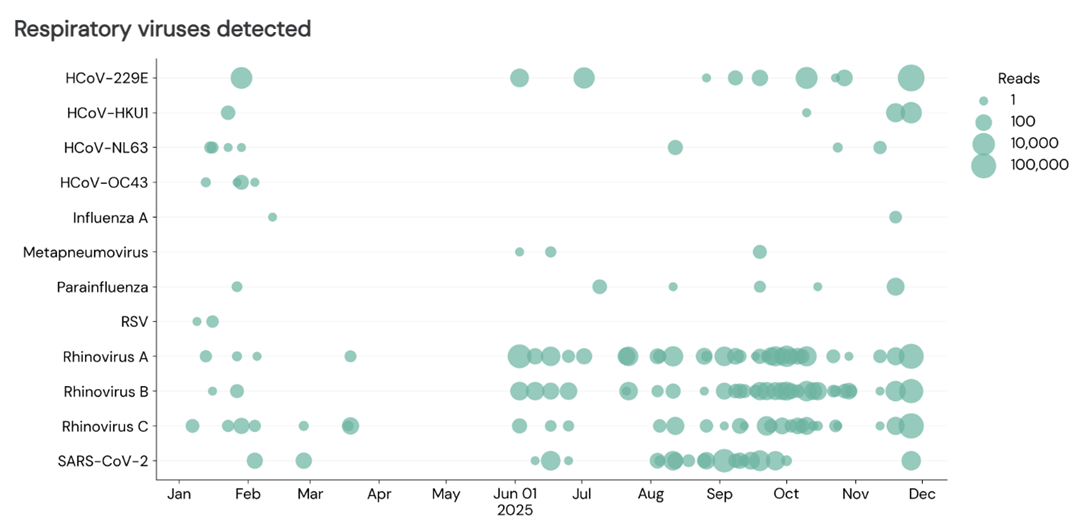
Source: SecureBio
According to The Boston Globe, in six months’ time SecureBio has paid out about $20,000 in incentives and collected 10,000 swabs. I tried to refuse the $2 payment, explaining that I just wanted to help further medical research, but the two staffers were insistent. So I received a brand new $2 bill, quite a novelty. And quite a fair compensation, considering that my effort — just like the swab part of an at-home COVID test — took only a few seconds.
Overall, my study experiences were positive ones, and I look forward to participating again — hopefully still as a healthy volunteer — in clinical research.
Read more about the role of healthy volunteers in clinical research.

Darcy Grabenstein
Director of Content Strategy and Thought Leadership | Citeline
Darcy is the Director of Content Strategy and Thought Leadership for Citeline. A journalist by training, she has more than 30 years of experience in marketing, advertising, and public relations.
How can I tell if a clinical study invitation is legitimate?
Be cautious with unsolicited emails—especially those promising large payments. Verify the sender, sponsor, and study details before clicking anything or sharing information.
What kinds of eligibility requirements do clinical trials typically have?
Eligibility varies by study and may include age ranges, location, and required technology or access.
Will I get my individual clinical trial results after I participate?
Not always. Some studies provide individual feedback, while others explicitly state that only overall study results will be reported and no individual data will be shared.



To enable the booking feature, please enable all cookies in your browser.