Citeline’s Ask The Analyst Service: Subject Matter Experts Matter
Blog
Patient Engagement & Recruitment

Our subject matter experts help customers make informed decisions around business strategy, investigators and sites, drug portfolios, regulatory implications, and more. Meet a few of our experts and see why they get such satisfaction from their work.
While many in the pharma industry are familiar with Citeline’s expertise in oncology, far fewer are aware of our mastery of ontology. That’s the sweet spot for Sean Vis, Senior Specialist, Content Strategy. He’s one of several subject matter experts (SMEs) and analysts featured as part of Citeline’s Ask The Analyst (ATA) service.
So what exactly is ontology? In short, ontology maps out multidimensional data. In information science, it’s a structured framework that defines concepts, terms, and the relationships between them.
 Sean Vis
Vis has been immersed in ontology and taxonomy work since completing post-graduate studies in information sciences. Like ontology, a data taxonomy is a structured system for organizing and classifying data into hierarchical categories. Prior to joining Norstella, Citeline’s parent company, Vis applied his ontology skills in both e-commerce and social media.
He says his team’s role is to curate, centralize, and manage linked data across the Norstella business — such as drug and clinical trial records — “everything that powers our products.”
What this means for clients is forming the connections made between diseases and drug targets with the data feeds they already use, allowing them to easily access the data. An example of this in practice is Citeline’s new Cohort SmartBuilder product and the ontology connections that help power it. But Vis says these background capabilities do more than power just one product, such as Pharmaprojects; they remove silos and interconnect other products, such as Biomedtracker, a product of Citeline’s sister company Evaluate, and Trialtrove.
The connections established are external as well. For example, Norstella’s diseases taxonomy uses ICD-10 as a skeleton structure. This ensures the data points are digestible to clients, because they are presented in a manner with which they are familiar and they can connect their own data to. Vis explains that connecting to public standards not only improves Norstella’s own data, it provides customers better access and ideas of ways to use it.
It’s the behind-the-scenes work of taxonomists like Vis that make the data manageable for Citeline customers — and for the analysts who support them.
 Laurie Withington
Here’s a snapshot of how Laurie Withington, Associate Director, Clinical Trials Intelligence, addressed a client’s patient recruitment query by taking a deep dive into the data.
A large pharmaceutical company sought information to support patient recruitment for an upcoming Phase III study in early breast cancer (ER+/HER2-). The client shared a list of 17 existing clinical trials it wanted to obtain:
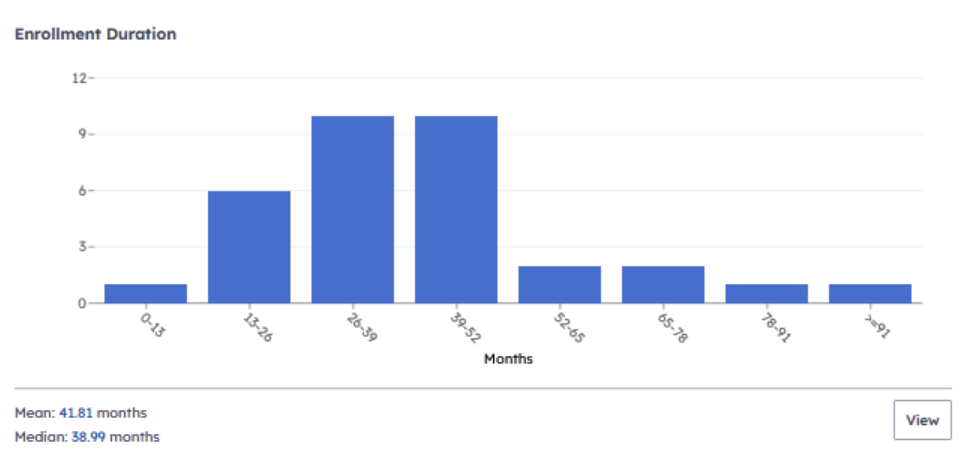
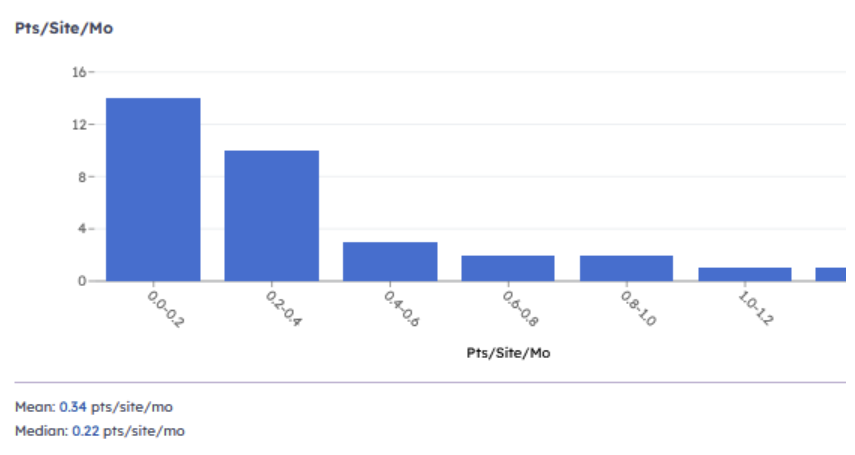
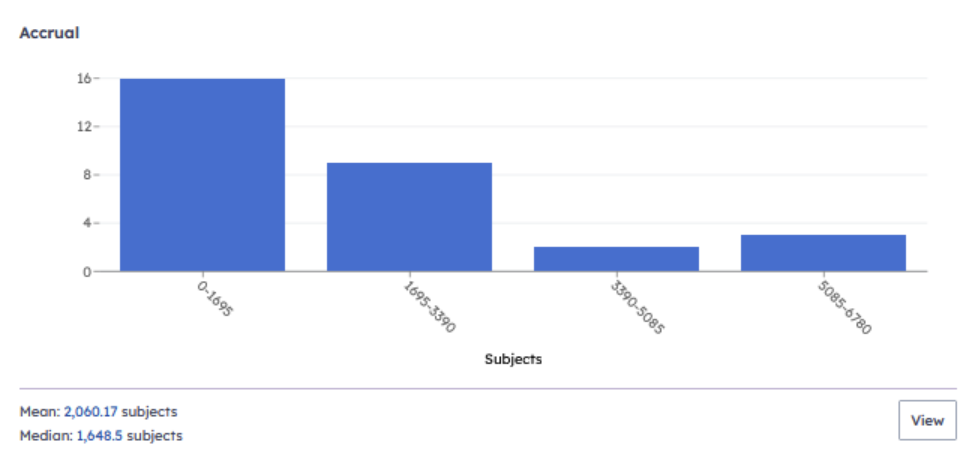
Withington’s detailed response included the following Trialtrove data on enrollment duration, patients/site/month, accruals, and reported sites:
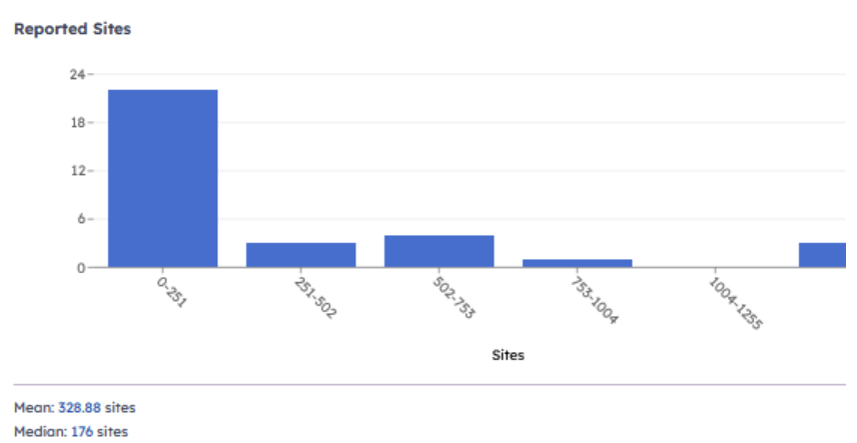
Source: Trialtrove
Having worked at Citeline for 18 years, it’s no wonder that parsing clinical data is second nature to Withington. With a PhD in vascular cell biology, post-doc work in vascular cell gene expression, and work experience at a pharmaceutical company, she’s well versed in the science behind the data. “I can provide a pharmaceutical perspective to the data that we provide and have an understanding of what our clients need,” she says.
Withington is not alone in her passion for serving clients. “I think all of us in ATA really want to help the client,” she says. “We want them to succeed. We want to give them the data that they’re looking for.”
That dedication is reflected in feedback received from a satisfied customer. “I have had a consistently positive experience with Citeline’s ATA service,” says a business insights manager at a large, global CRO. “The team demonstrates a strong commitment to responsiveness, reliably addressing inquiries in a timely manner — even when the questions are complex or require deeper investigation. What stands out most is their ability to engage thoughtfully with my requests. Rather than providing generic answers, the support team takes the time to understand the underlying need and tailors their responses to surface the most relevant information, which is often a challenging task that sometimes requires a combination of using both the Pharmaprojects and Trialtrove platforms.”
 Jake Mathon
The ATA team is often called upon to help clients facing specific clinical challenges. Senior Manager Jake Mathon, who works with Citeline’s Trialtrove, Sitetrove, and Plus products, shares how he helped a client with patient recruitment. “Recently I had a client that was struggling to find benchmarks for a very specific patient population,” he says. “This involved a particular disease with a specific biomarker as an inclusion criterion and many risk factors that were part of the exclusion criteria.
“There were only two trials that fit that criteria, but we were able to generate an enrollment rate based on those two trials. And by running some additional searches that were a bit less restrictive, I was able to verify that the client's protocol requirements would not likely affect the overall enrollment rate as the less restrictive rate generated from a larger set of trials was virtually the same.”
This year marks two decades that Mathon has been on the staff at Citeline. He was previously affiliated with a competitive intelligence firm focusing on pharmaceuticals, life science, and healthcare. Prior to that, he worked in pharmaceutical sales. “I really got to know the industry quite a bit,” he says.
Mathon oversees all the data in Trialtrove and Sitetrove for these therapeutic areas (TAs): cardiovascular, metabolic, infectious diseases, vaccines, and genitourinary disease. This encompasses data curation as well as all client interactions with the ATA service.
“Almost anybody can collect data and store it,” Mathon says, “but our analysts … follow trends, are up to date with what’s going on the marketplace, what’s coming up in the pipelines. … The ATA service is truly what sets us apart from our competitors.”
Based on her comments, an associate vice president at a nonprofit research institute would most certainly agree. “The ATA service is easily one of the best features of our Datamonitor Healthcare subscription!” she said. “Every analyst that I’ve messaged with has consistently gone above and beyond to research the questions I’ve submitted. Not only do they respond within the next day — if not sooner — but so often they reach back out with helpful follow-up information later.
“My role requires that I make a quick assessment about a product’s market potential and place in therapy within a given indication. I’m certainly not a subject matter expert in every therapeutic area I research, so it’s crucial that I’m able to lean on the analysts to help me better put trial results or regulatory milestone achievements into the proper context of that product’s competitive landscape.”
 Sydney Enokawa
Although Sydney Enokawa, Specialist, Content Strategy considers herself a generalist across Norstella datasets, with a degree in neuroscience she’s no slacker when it comes to credentials.
Her team sits at the intersection of all three of its goals:
“The favorite part of my role,” she says, “is ensuring that our analyst expertise flows into the products we build. I work closely with our technical teams on solutions like Pharmaprojects+ and enhancements like the Drug Type field. I bring in Norstella data knowledge to guide which fields we utilize, to ensure that data manipulations are sensible, and to validate that the outputs are meaningful to clients.
“My team provides a bridge between the analyst knowledge base and products by asking not just ‘Is this data accurate?’ but ‘Is this data telling the right story for the use case?’ That includes driving business logic decisions, setting thresholds, and making sure the expertise that lives in this team is being translated into Norstella products.
“A lot of what I do is about closing the gap between data that exists and data that's usable. Our analysts have tremendous expertise in record authoring, in therapeutic area knowledge, and in understanding what makes a data point meaningful. My job is to make sure that knowledge isn’t restricted to SMEs but actually gets embedded into the logic of what we build.”
 JT Toebbe
In his role at Citeline, Analyst III JT Toebbe draws upon his depth of education and work experience. JT earned an undergraduate degree in biochemistry and a master’s in toxicology. He worked at an academic research lab and had hoped to work at a pharmaceutical company in drug development. However, the opportunity to work at Citeline “kind of fell into my lap,” he says. At Citeline, his focus shifted from Parkinson’s disease to oncology.
“One of the most exciting parts of the job,” he says, in addition to helping clients across the globe, “is learning, reading. There’s a lot to learn.”
Toebbe says he receives client queries on a wide variety of topics. “Our clients reach out for competitive intelligence use cases, scenarios where they want to see the landscape for a certain disease or therapeutic area. … We help them dig a little deeper to fill that void in their analysis.”
What may at first appear as a straightforward request often takes some twists and turns. He says a client asked about non-small cell lung cancer (NSCLC) and drugs targeting EGFR. “There’s a list of specific mutations in that protein that helps stratify the patient population,” he explains. Using Trialtrove data, JT was able to track down information on patient inclusion criteria and biomarkers, then link that to Pharmaprojects to see what drugs are being used in those trials. “Finding creative solutions for mutation-based searches is where my oncology experience comes into play.”
 Rebecca Bridge
Citeline Analyst III Rebecca Bridge is also no newcomer to the field. With a degree in applied biology, she has been working with Pharmaprojects 20 years. Previously, she worked for a pharmaceutical company, creating animal vaccines.
Bridge describes herself as more of a generalist; she maintains all the chemical data in Pharmaprojects, ensuring that the structures are all present. Because of her deep historical knowledge, she is often the go-to for many queries.
Just as her expertise is broad, so are her responsibilities. “My role is quite varied,” she says. “I help keep the quality control of our editorial process for Pharmaprojects subscribers. I also respond to client queries with Ask The Analyst.” Bridge says queries run the gamut, from basic search strategy to competitive intelligence, looking for partners/licensing agreements/collaborations, to analyzing complex datasets.
“I think part of what makes us unique is the fact that although we use technology to pull in the sources for our data, we manually review it,” Bridge says. “Clients know they can ask us any question, even completely out of the box. It’s not just one level of service. There’s so many layers on top of each other.”
 Ridwaan Ibrahim
As Director of Epidemiology at Norstella, Ridwaan Ibrahim works to understand what the disease burden is and model the data to help clients discover unmet needs. Ibrahim surfaces data, such how many patents exist in different geographies, that impact clients’ clinical development. And she also helps both pharma and biopharma clients with commercial forecasting, estimating market size and future demands.
Ibrahim holds a degree in pharmacology and a master’s in epidemiology; her dissertation focused on lab-based research. But because she enjoys visualizing and analyzing data, she chose a career path that uses more of her analytical skills.
She joined a small consultancy focusing on market research and pharma forecasting. There she examined risk factors such as age and gender to help pharma and bio clients understand patient segmentation. Evaluate, Citeline’s sister company, acquired the consultancy. Today, Ibrahim oversees analysts in London and India.
Over 500 SMEs (analysts and journalists) make up a global team providing customer access 24/7. Top therapeutic areas covered include oncology, autoimmune/immunology, central nervous system, metabolic/endocrinology, infectious disease, cardiovascular, ophthalmology, and respiratory.
Learn more about Citeline’s Ask the Analyst services.
What is the Ask The Analyst (ATA) service?
Ask The Analyst is a Citeline service that gives clients 24/7 access to a global team of over 500 subject matter experts — including analysts, scientists, and journalists. These experts help clients navigate complex clinical data, competitive intelligence, and therapeutic area questions using platforms like Trialtrove, Pharmaprojects, and Sitetrove.
What kinds of questions can I submit to the ATA team?
The ATA team handles a wide range of queries — from basic search strategy to competitive intelligence, patient recruitment benchmarks, drug target analysis, disease landscape assessments, licensing and collaboration lookups, and complex dataset analysis. Even highly specific questions, such as those involving rare biomarkers or narrow patient populations, are within scope.
What therapeutic areas does the ATA service cover?
The ATA team covers all major therapeutic areas, with particular depth in oncology, autoimmune/immunology, central nervous system, metabolic/endocrinology, infectious disease, cardiovascular, ophthalmology, and respiratory.

Citeline's 2026 Annual Completed Clinical Trials Report analyzes 4,364 industry-sponsored Phase I–III/IV clinical studies completed in 2025 — an 11% decline from the prior year. Despite fewer trials overall, 2025 proved to be a year of quality over quantity.