



Ground every clinical trial decision in the patient

Patient Intelligence connects real-world patient populations, treatment guidance, and care journeys with Citeline’s trial, site, investigator, and pipeline intelligence, helping clinical development teams make better-informed protocol, feasibility, and site-planning decisions.

Bring patient reality into clinical development decisions

Patient Intelligence helps sponsors and CROs understand where relevant patient populations are, how patients are expected to be treated, what happens across real-world care journeys, and which providers see them.

Powered by NorstellaLinQ real-world data and connected to Citeline’s established clinical intelligence, Patient Intelligence brings patient context into the workflows used for protocol planning, feasibility, site selection, and patient recruitment. Instead of treating patient data as another disconnected input, teams can evaluate it alongside the trial, site, investigator, and pipeline data already informing their decisions.

FEATURES

The patient intelligence you need, brought together

Understanding the feasibility of a clinical trial often requires teams to reconcile information from multiple vendors, claims and EHR sources, internal trackers, CRO deliverables, and clinical intelligence tools.

These sources may be updated at different times, structured in different ways and analysed by different teams. The result is a fragmented view that can make it difficult to answer critical planning questions consistently:

''

Is there a sufficiently large and accessible patient population?

''

Where are relevant patients located?

''

Does the proposed protocol reflect current treatment guidance?

''

How are patients actually diagnosed and treated in clinical practice?

''

Which providers and potential sites have access to relevant populations?


Patient Intelligence brings these perspectives into a more connected environment, helping teams evaluate the patient, protocol, and site landscape together.

Patient intelligence built on connected clinical and real-world data


  • 74B+

    linked real-world data points

  • 3B+

    clinical notes 

  • >95%

    clinician-validated extraction accuracy

  • 99.4%

    patient linkage precision

How it helps

Patient Intelligence gives clinical teams access to patient context earlier, when protocol, country, site, and recruitment assumptions are still being formed.


Use Patient Intelligence to:


''

assess whether relevant patient populations exist and where they are concentrated

''

explore how patient populations may change during a study’s planned enrollment period

''

compare proposed study assumptions with current treatment guidance

''

understand real-world treatment patterns, care transitions, and lines of therapy

''

identify providers treating relevant patient populations

''

evaluate patient access alongside site and investigator intelligence

''

bring patient diversity and demographic context into country and site planning

''

support more transparent, evidence-based feasibility discussions

FEATURES

What You Can Do with Patient Intelligence

How it works

Patient Intelligence brings together four complementary perspectives on the patient, presented through a dedicated dashboard while also strengthening the Citeline workflows used for trial, site, and recruitment planning.

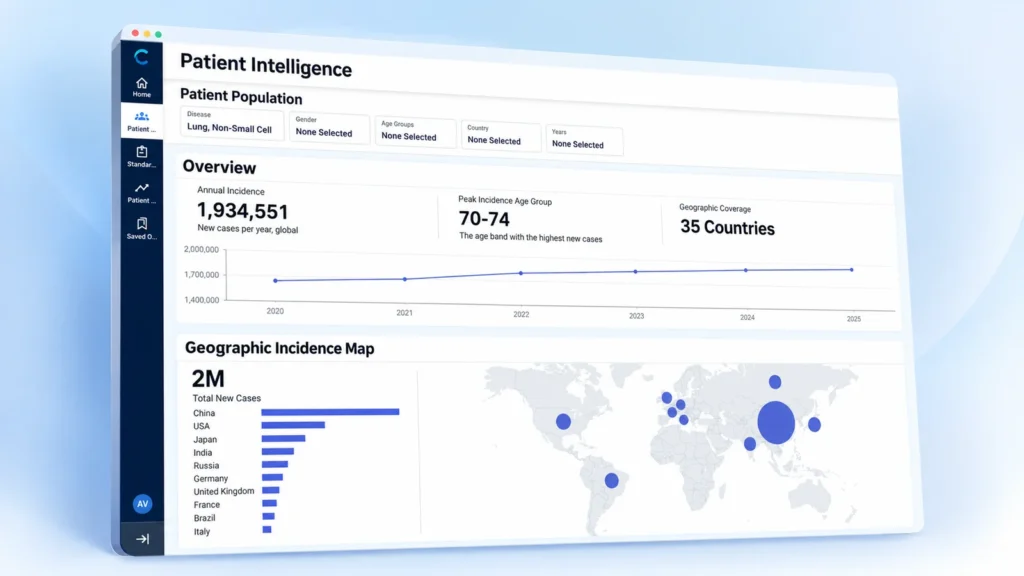
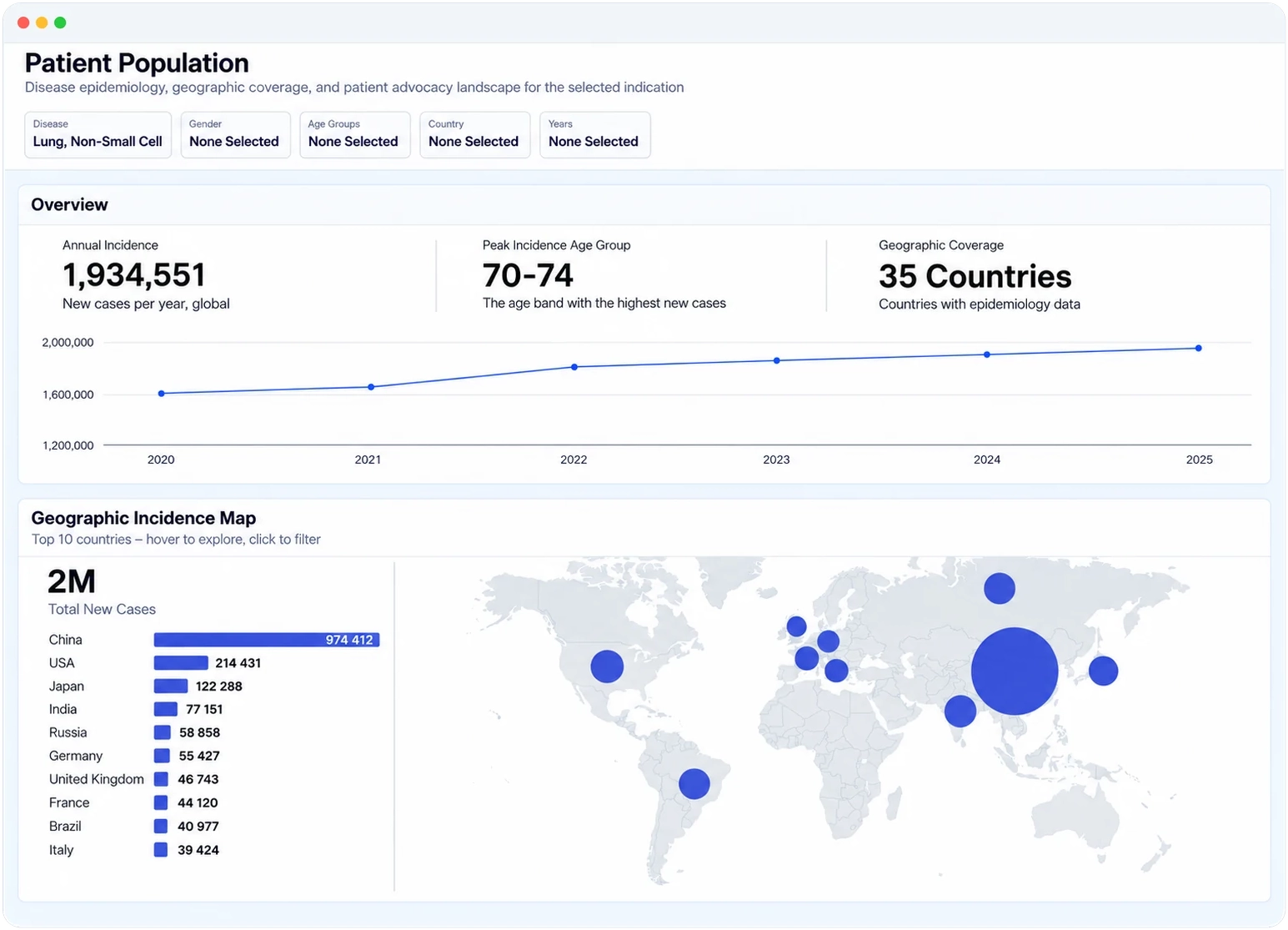
  • Patient Population shows whether relevant patient populations exist and where they are located, using global epidemiology across supported diseases.
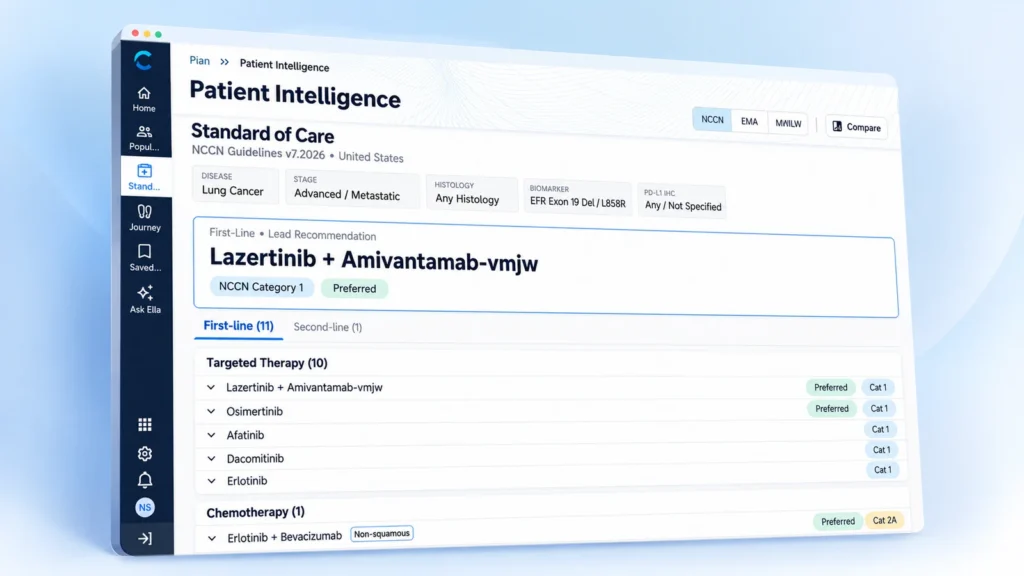
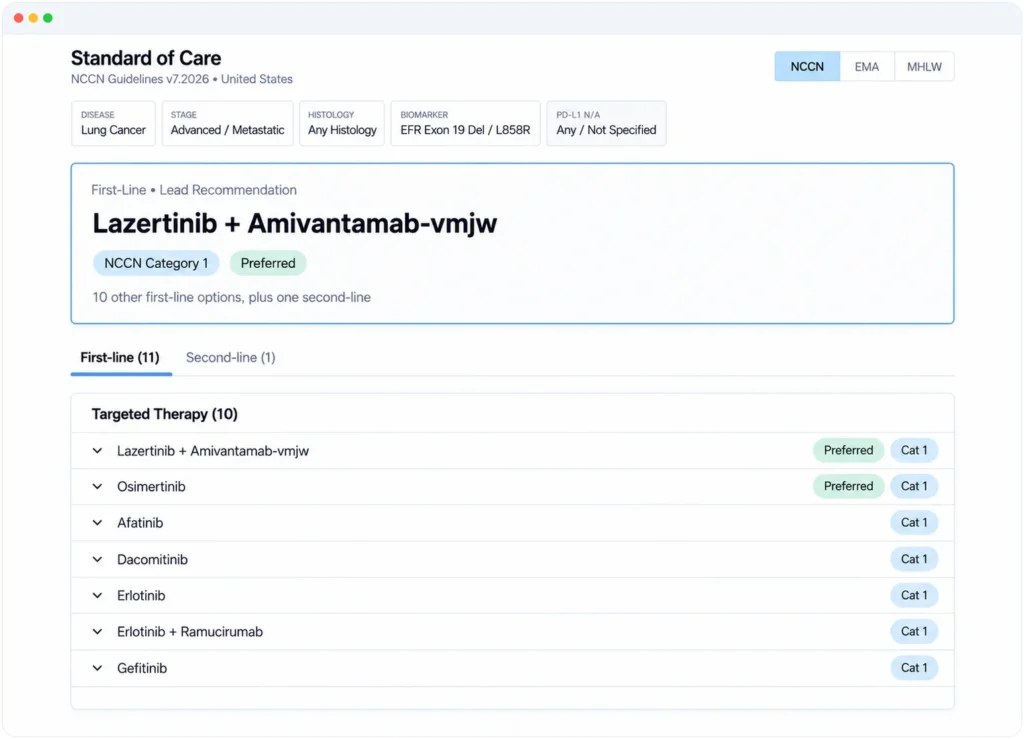
  • Standard of Care shows how patients are expected to be diagnosed and treated under current clinical guidance, with views by biomarker and line of therapy.
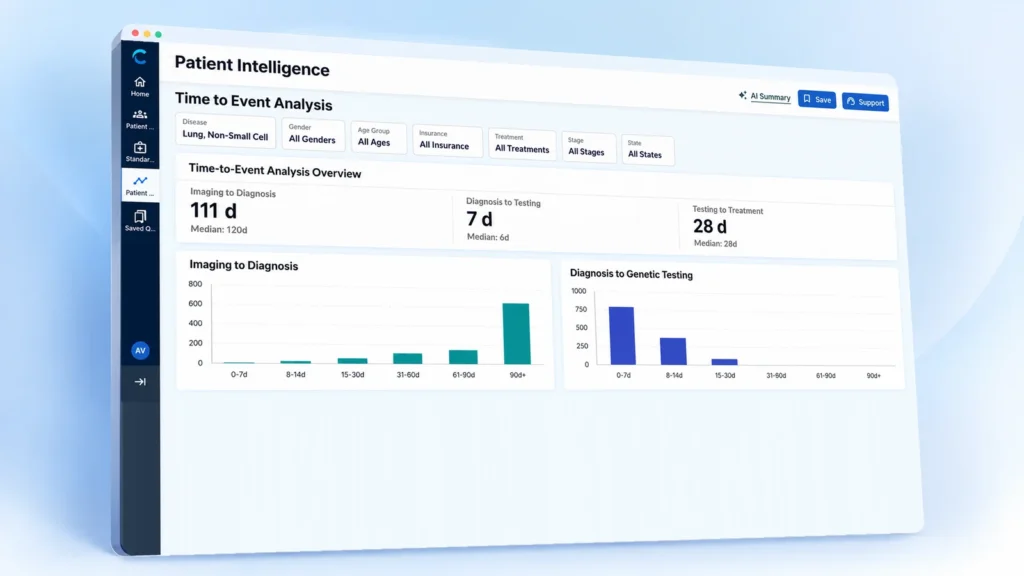
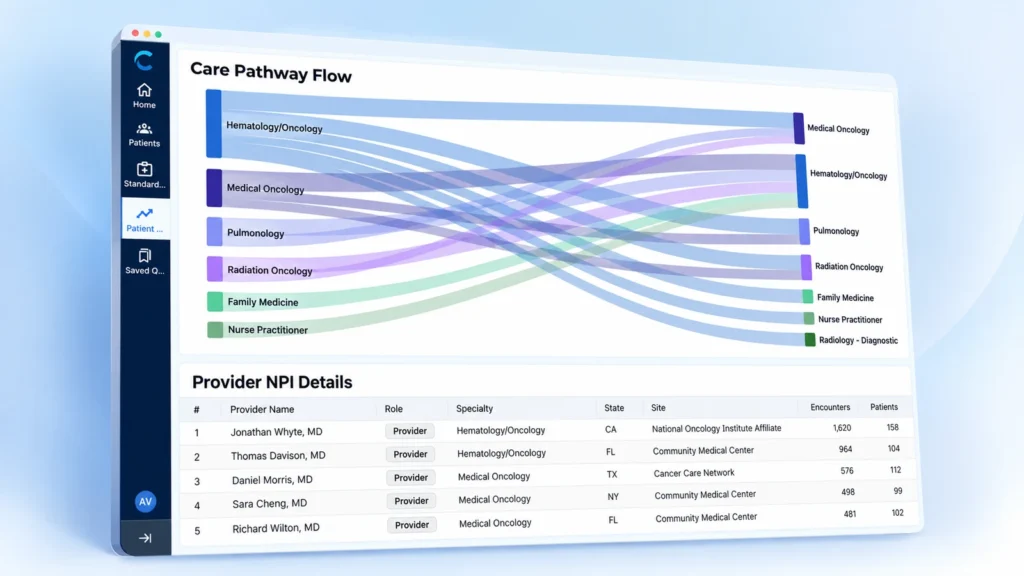
  • Patient Journey shows what happens in clinical practice, using de-identified US real-world data to reveal treatment patterns, line-of-therapy progression, and transitions across care.
  • Patient Access and Proximity, built into Sitetrove and mapped to investigator and site records, this pinpoints and prioritizes countries and global sites with higher volumes of clinically relevant patient populations, helps reach diversity enrollment targets, and identifies US physicians near investigators who have access to the right patients for referrals.
Preview of the Patient Intelligence dashboard featuring a circle and line graph displaying patient encounter trends.

Why it matters

Clinical development decisions are stronger when teams can see not only where trials have run and which investigators have experience, but also where relevant patients are, how they are treated, and which providers see them.

Patient Intelligence connects patient evidence with Citeline’s trial, site, investigator, and pipeline intelligence. This helps teams:

  • examine protocol assumptions against patient and treatment realities;
  • assess geographic feasibility using population context;
  • compare recommended treatment with real-world practice;
  • identify providers with relevant patient volumes beyond established investigator networks;
  • evaluate potential sites using patient access as well as historical experience;
  • make planning decisions using connected, traceable evidence.
Preview of the Patient Intelligence dashboard featuring a world map filtered by certain cases.

What’s included


Explore coverage across more than 250 diseases, including incidence, prevalence, and country-level population distribution.

A five-year projection helps teams understand how patient populations may change over the planned enrollment period, so studies can be sized against where the population is heading, not only where it stands today. Patient advocacy organizations are also surfaced by disease, providing a starting point for community engagement and recruitment research.

Review guideline-recommended treatment regimens by biomarker and line of therapy.

Standard of Care can help teams assess whether proposed control arms, eligibility criteria, and treatment assumptions reflect current guidance.

Understand how patients move through care in the real world, including treatment patterns, line-of-therapy progression, and care transitions.

Patient Journey also connects patient populations with the providers treating them, helping teams identify relevant providers who may sit outside existing investigator and site networks.

Patient Journey uses de-identified US real-world data from NorstellaLinQ.

Patient Access and Proximity

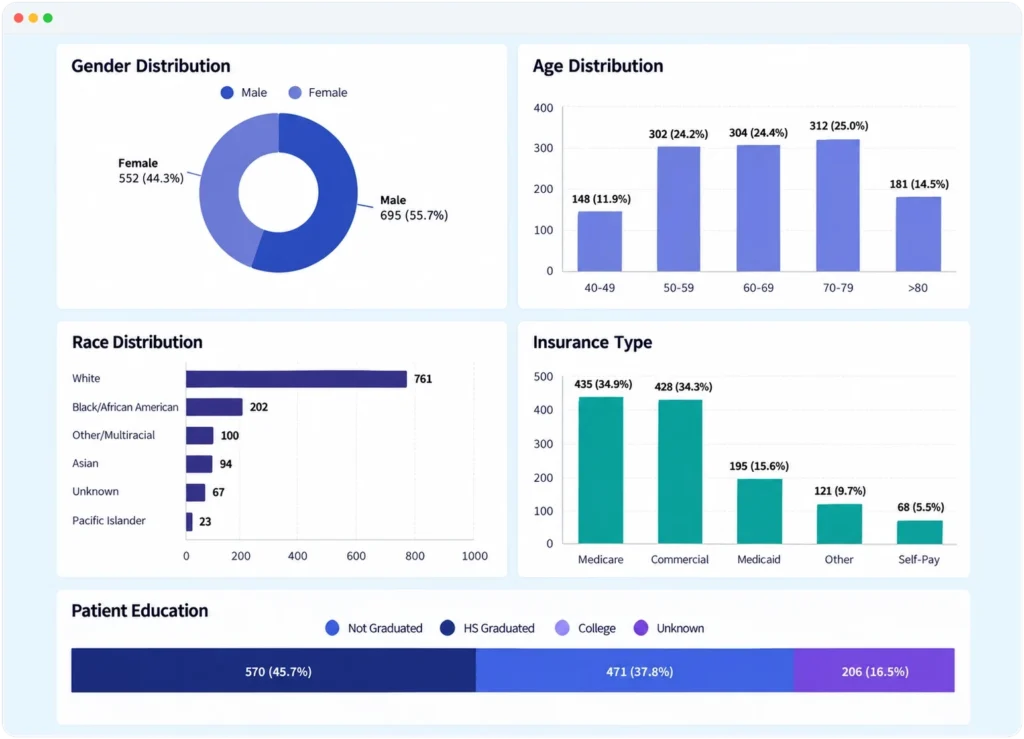
Understand who your patient population is, where they are concentrated and how population characteristics vary across countries, regions, and care settings.

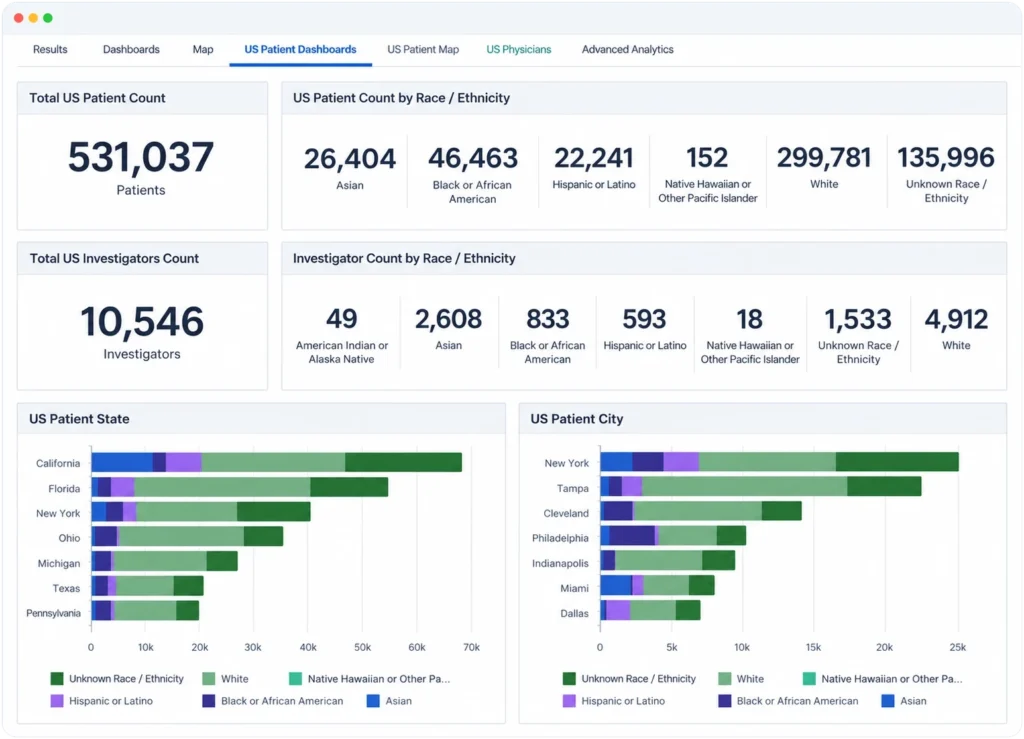
Patient Intelligence brings demographic, epidemiological, and patient representation data into clinical development planning, helping teams evaluate potential study geographies, inform site strategy, and assess patient access considerations earlier in the process. By incorporating patient population context alongside trial, site, and investigator intelligence, teams can make more informed decisions about study design, feasibility, and recruitment planning.


Powered by NorstellaLinQ

Patient Intelligence is powered by NorstellaLinQ, Norstella’s curated real-world data foundation built to support clinical development. NorstellaLinQ connects claims, EHR, lab and biomarker, clinical note, and social determinants of health data at the de-identified patient level, creating a longitudinal view of the patient journey across multiple data sources.

With open claims and lab data refreshed weekly and closed claims refreshed monthly, teams can make feasibility, planning, and recruitment decisions using a more current view of patient activity.

Patient Journey also incorporates insights from clinical notes, using disease-specific language models with clinical validation to surface details such as staging, histology, biomarkers, and treatment rationale that may not be available in structured data alone.

Speak to an expert
A person typing on a keyboard.
A person looking at a screen. Two people in business suits talking.
Our experts
Clinical intelligence backed by trusted expertise

For more than 30 years, Citeline has helped life-sciences teams understand clinical trials, sites, investigators, and drug development pipelines.

Patient Intelligence adds patient populations, treatment context and real-world care journeys to that foundation, helping teams consider a more complete clinical-development picture. Citeline’s data is sourced, structured, and curated to support clinical research and development decisions.
See Patient Intelligence for an indication you’re working on

A Citeline specialist can demonstrate Patient Intelligence, helping you explore patient populations, treatment guidance, real-world care journeys, and provider context in relation to your clinical-development priorities.


Citeline may contact you about relevant products, services, and content. To opt out of these communications or to manage what you receive, please visit our Preference Center.

Your information will be used in accordance with our Privacy notice.

Sign up for Actionable Insights, our quarterly newsletter packed with data-rich reports, expert analysis, and global updates.
Darkened Qualified calendar. Please allow all cookies to use functionality.

To enable the booking feature, please enable all cookies in your browser.