How AI Has Revolutionized Clinical Development
Article
Clinical

Artificial intelligence is expanding beyond the preclinical phase of clinical trials to Phases I, II, and III in the areas of protocol design, site selection, feasibility, and patient recruitment.
While artificial intelligence (AI) has been optimizing the preclinical phase of clinical trials for several years, the big transition, said Suzanne Caruso, President of Clinical, Regulatory, and Strategic Intelligence, “is very much taking AI into the clinical trial Phase I, II, and III universe and saying, ‘How can we now leverage the work of AI and real-world data [RWD], which is such a massive amount of data, make it something that you can actually garner insights from?’ And we're able to do this.”
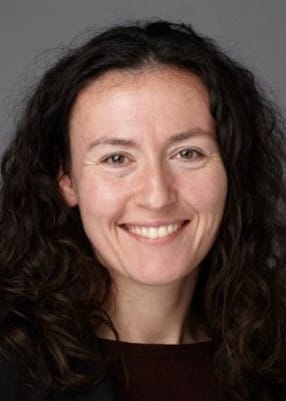 Suzanne Caruso
Caruso discussed AI, her favorite topic, with Bruno Quinney on a recent episode of the Drug Discovery World (DDW) “In Conversation With” podcast, which covers drug discovery and development, pharma, and biotech.
“The other area that I'm seeing AI being used a lot is in study start-up,” Caruso said. “It takes anywhere from six months to nine months to even 12 months sometimes to get your study open at these sites so patients can be enrolled. And there are lots of opportunities for AI to help us speed up that timeline globally. We're starting to see that in protocol design and site selection and feasibility.”
When asked about other advantages of AI in clinical trials, Caruso was quick to respond, citing financial advantages as twofold. Tying it into RWD, Caruso said there is enough data in the public domain to build synthetic cohorts of patients. What that means, she explained, is “historically we've always had a drug that's active in a Phase III and a placebo arm, which means we have patients who are just receiving essentially a sugar pill. … Imagine being able to run an analysis using AI to match a patient population with a synthetic arm so you don't have to enroll those patients.” That could cut the study time in half, she noted.
“That is a massive,” she said. “You're talking about a million dollars a day to have a large Phase III study open.”
Caruso said another area that benefits from AI is patient recruitment. She noted that stumbling blocks are not due to a lack of patients but access to patients and where they are being treated. “We have a way to be more proactive with AI because we know where people are showing up that match the protocol criteria. ... AI takes that text from a protocol, builds an algorithm that says these are the patients that would be eligible, and then looks at real-world data, which is essentially patient data, to say, ‘Where are the patients that today meet the criteria for that inclusion-exclusion criteria?’”
She said this reduces about 80% of the workload, saving a tremendous amount of time in patient identification and matching a trial protocol to the patient population. “It’s an area that AI has sped us along instead of just passively waiting for patients to come, proactively saying ‘These are where the patients.’ … It's kind of flipped the paradigm of patient recruitment.”
Quinney also asked how AI can impact trial delivery and how effectively a trial is run. Caruso cited a direct impact in terms of monitoring. “We are getting real-time feedback and the ability to adjust faster than ever,” she said. “And that is absolutely being powered by the amount of data points that AI can go through in real time.” Caruso said monitoring initially was tracked on paper, then transitioned to remote monitoring. Now, she said, this is being done in minutes and seconds instead of days and weeks. “So it's just a different paradigm there.”
Shifting gears, Quinney asked Caruso to share her perspective on what it means for a company to be AI native.
Caruso acknowledged there are many different definitions of the phrase. “When a company really reaches being AI native,” she said, “a lot of the products that they're putting out and a lot of the work that they're doing are actually being run by agents.” She noted that these efforts are supervised by subject matter experts (SMEs) in a given area, such as clinical trials. “So it really is a change from the legacy way of working.
“I do think there is a bit of change, though, in mindset of classically what people were working on in their day-to-day and what they're working on now at AI-native companies.” Caruso expects this to have a direct impact on clinical trials and clinical development. “The goal there is can we figure out if these drugs work? And we want to do that as quickly as possible.”
Quinney asked Caruso if she sees reluctance to embrace AI technology due to a lack of reliance and trustworthiness. Her short answer: Yes. “I don't think any of us fully have seen something really run without hallucinations on an LLM. ... And I think our job now is to get the highest quality output by any AI agent or any model that we're working with and knowing that it's always going to need some kind of oversight. … [T]rust is just going to come with time.”
She emphasized the importance of citing sources. “Sourcing is the most critical thing we can do in data intelligence. We're doing it every day” to provide sources that can be referenced outside of the agent. One example she gave is a forthcoming product from Norstella, Citeline’s parent company, a competitive intelligence agent called Atlas CI.
Asked to share a key takeaway, Caruso responded: “I think the one way and the one big takeaway is you have to try it. It is where we are all going. Don't be scared of it and know that it will always need this human in the loop as well.”
Listen to the full podcast at Drug Discovery World. And check out additional AI resources on our AI hub.
How is AI being used in the study startup phase of clinical trials?
AI is helping reduce the time it takes to open a study site for patient enrollment, which traditionally takes six to 12 months. It is being applied to protocol design, site selection, and feasibility assessments to speed up that timeline globally.
How can AI reduce the number of patients needed in trials?
By using real-world data (RWD), AI can build synthetic patient cohorts that serve as a placebo arm, potentially eliminating the need to enroll patients who would only receive a placebo. This could cut study time in half.
How can AI improve patient recruitment for clinical trials?
AI can analyze protocol criteria, identify eligible patients from RWD, and pinpoint where those patients are being treated — proactively rather than waiting for patients to come forward. This approach reduces about 80% of the workload in patient identification and matching, fundamentally changing how recruitment is done.